Gloss That Cuts Through Winter Residue
Paint Waxing & Polishing in Two Harbors for vehicles weathered by road grime and seasonal exposure near Lake Superior
Dull or weathered paint becomes cleaner and more polished after appearance-focused care that refreshes gloss and maintains a cleaner-looking exterior through waxing and polishing. Northwoods Collision & Maintenance provides paint waxing and polishing for vehicles subjected to grime, winter residue, road debris, and seasonal exposure common around Lake Superior, where salt spray, freeze cycles, and months of accumulated road film leave paint looking flat and oxidized even after washing. This is cosmetic detailing that restores visual clarity and surface smoothness, distinct from collision painting or body repair work that addresses structural damage or paint refinishing needs.
The process removes bonded contaminants that washing alone can't clear—embedded brake dust, tree sap, bug residue, and oxidation that dulls the clear coat and makes paint feel rough to the touch. Polishing cuts through the oxidized layer to reveal the original color depth underneath, then waxing seals the cleaned surface so water beads off and contaminants don't bond as quickly during the next round of daily driving.
Schedule exterior care to address paint that looks hazy or feels rough after months of winter exposure and road use.
What You Notice Once Exterior Care Is Finished
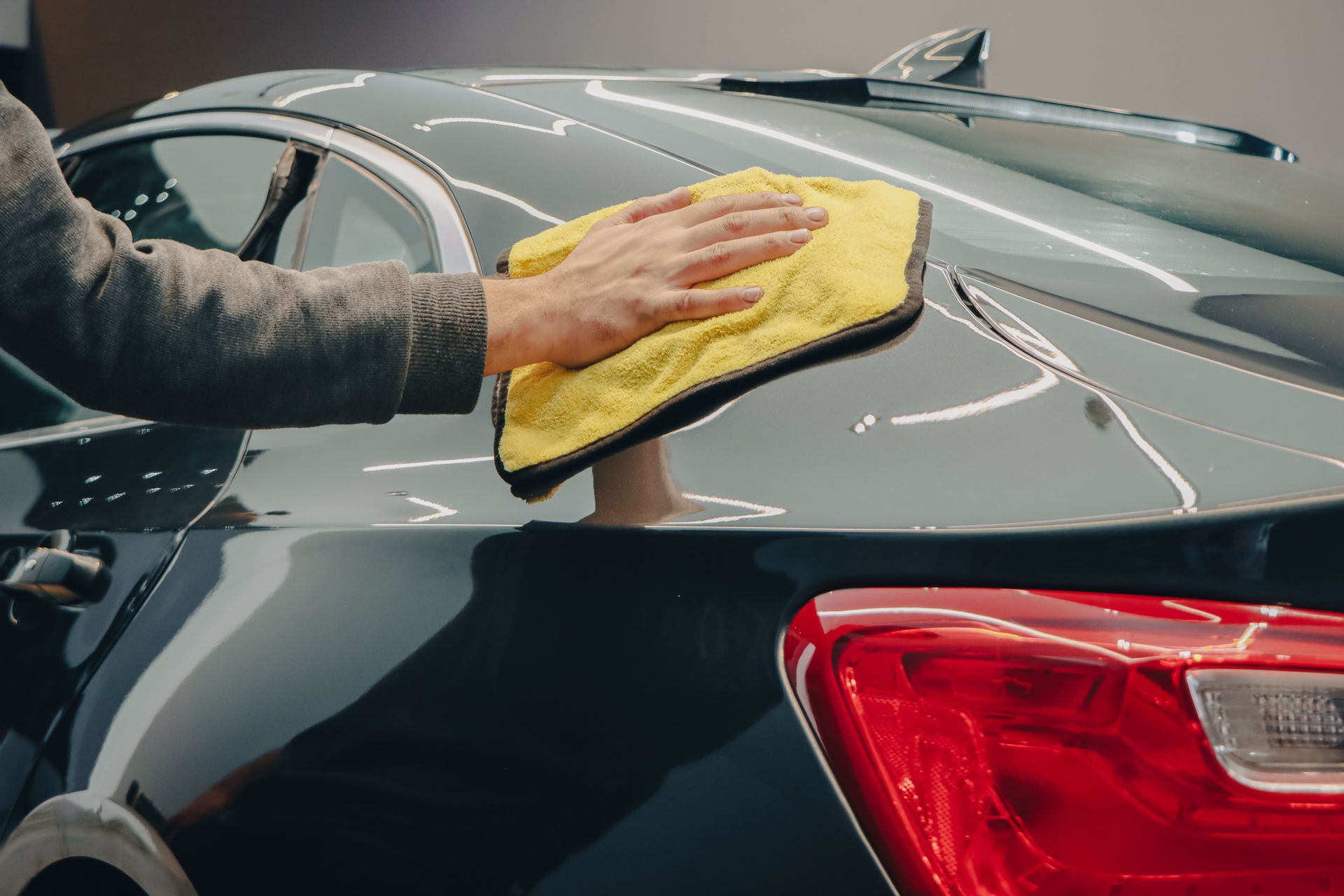
Paint waxing and polishing work focuses on the visual transformation that happens when contamination and oxidation are removed from the clear coat surface, and the results are most dramatic on vehicles that haven't been detailed in over a year or that spend significant time parked outdoors near saltwater or on gravel roads. Polishing physically levels the clear coat to remove fine scratches and oxidation, while waxing adds a protective layer that resists water, dirt, and UV exposure that would otherwise degrade the finish over the following months.
After the work is complete, paint reflects light evenly instead of appearing cloudy or matte, colors look deeper and more saturated, and the surface feels smooth rather than gritty when you run your hand across the hood or door panels. Water sheets off the paint instead of sitting in place, and dust or pollen wipes away more easily because the wax layer prevents contaminants from bonding directly to the clear coat.
Waxing and polishing covers the painted exterior surfaces and is scheduled based on how often the vehicle is driven in harsh conditions—vehicles exposed to winter salt, gravel roads, or coastal moisture benefit from more frequent detailing than those garaged year-round, and the service doesn't address paint damage that requires repair or respraying unless that work is arranged separately.
Questions Before Starting Your Project
Vehicle owners who notice their paint looking dull or weathered often ask about the difference between detailing and repair, and what results to expect from waxing and polishing alone.
What's the difference between paint waxing and collision painting?
Waxing and polishing restore gloss and clarity to existing paint by removing surface contamination and oxidation, while collision painting involves respraying panels with new paint and clear coat after body damage or when the original finish is too degraded to restore through detailing.
How long does wax protection last after detailing in Two Harbors?
Wax durability depends on exposure—vehicles driven daily through winter salt and road grime will see wax protection degrade within a few months, while garaged vehicles or those driven primarily in dry conditions can maintain wax protection for six months or longer before reapplication is needed.
Why does paint around Lake Superior weather faster than in drier climates?
Salt spray, high humidity, and UV exposure near the lake accelerate oxidation and clear coat degradation, causing paint to lose gloss and develop a chalky texture faster than vehicles operated inland where moisture and salt exposure are lower.
When should I schedule paint waxing and polishing to prepare for winter?
Late fall detailing removes summer contaminants and applies a protective wax layer before winter salt and grime accumulate, giving the paint a head start against the harsher conditions that will affect it over the following months.
What should I look for to know if my paint needs polishing or just waxing?
If paint feels rough to the touch, looks hazy even after washing, or shows swirl marks and fine scratches under direct light, polishing is needed to level the surface before waxing—wax alone won't remove bonded contaminants or oxidation that's already degraded the clear coat.
Northwoods Collision & Maintenance handles paint waxing and polishing for vehicles driven through the grime, winter residue, and seasonal exposure common on north shore roads. Book exterior care to refresh your vehicle's appearance and protect the finish from ongoing exposure to harsh conditions.